
Mechanical diesel injector repair & pop-testing
We strip, clean, rebuild and pop-test pencil, pintle and multi-hole mechanical diesel injectors on dedicated test benches — restoring correct spray pattern, opening pressure and atomisation for cars, commercial vehicles, marine and agricultural engines.
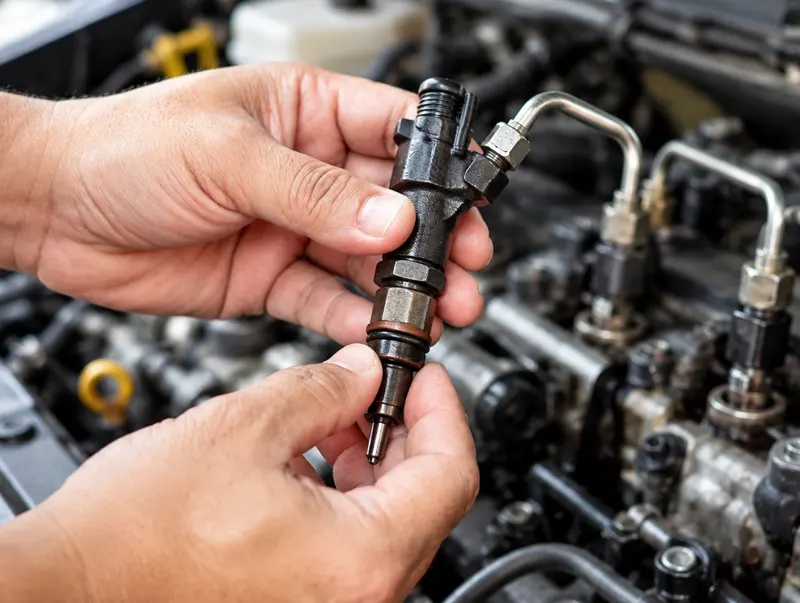
Mechanically actuated, so the fix is mechanical too
Mechanical diesel injectors — used on older direct and indirect injection engines without electronic control — rely entirely on fuel pressure from the injection pump to lift the needle valve and atomise fuel. Over time the nozzle wears, the needle sticks or scores, and the calibration spring loses its set pressure. The result is rough idling, hard starting, smoking and lost power, even when the fuel pump itself is healthy.
Our workshop strips each injector down to the nozzle and needle assembly, ultrasonically cleans the carbon and lacquer deposits, inspects the seat and spray holes, and replaces worn nozzles, needles or springs to OEM specification. Every injector is then set and pop-tested on a calibrated test bench to confirm opening pressure, spray pattern and seat tightness before it's cleared to go back on the engine.
Injector Types Serviced:
Common on Cummins mechanical engines; checked for pop pressure, leak-back and spray cone.
Used in indirect injection (pre-chamber) engines; nozzle and pintle wear checked closely.
Direct injection engines; each spray hole inspected for erosion and carbon blockage.
Common symptoms of failing mechanical injectors
Any of these on an engine with mechanical injectors is worth a bench check before parts get replaced blindly.
Rough or uneven idle
A sticking needle or worn nozzle disrupts spray pattern on one or more cylinders.
Hard or delayed starting
Low or inconsistent opening pressure delays fuel delivery, especially when cold.
Excess smoke or knocking
Worn spray holes or a dribbling nozzle send unatomised fuel into the chamber.
Loss of power
Reduced or uneven fuel delivery across cylinders shows up as flat throttle response.
Fuel smell or leaks
A worn needle seat or seal lets fuel weep past instead of atomising cleanly.
Increased fuel use
A dribbling or over-fuelling injector burns more diesel for the same output.
From strip-down to pop-test, on the bench
Intake & inspection
Injectors are logged, tagged by cylinder position and visually inspected for damage before disassembly.
Strip & ultrasonic clean
Nozzle, needle and body are separated and ultrasonically cleaned to remove carbon and lacquer buildup.
Wear inspection
Nozzle seat, needle, spray holes and spring are checked against OEM tolerances; worn parts are flagged for replacement.
Rebuild with OEM-spec parts
Worn nozzles, needles or calibration springs are replaced to the engine's original specification.
Pop-test & calibration
Each injector is set on the test bench to confirm opening pressure, spray pattern and leak-back before sign-off.
Cars, commercial, marine & agricultural
Mechanical injectors are still common across older and heavy-duty diesel engines still in daily use across Qatar.
Cars & SUVs
Older diesel passenger vehicles running mechanically actuated injection systems.
Commercial vehicles
Trucks, buses and fleet vehicles with mechanical inline or rotary pump injection.
Marine engines
Inboard and auxiliary marine diesels using pencil or multi-hole injectors.
Agricultural equipment
Tractors and generators running mechanical injection under continuous duty cycles.
Generators & pumps
Stationary diesel plant where injector condition directly affects fuel efficiency.
Industrial diesel
Workshop and site equipment powered by mechanically injected diesel engines.